
Table of Contents
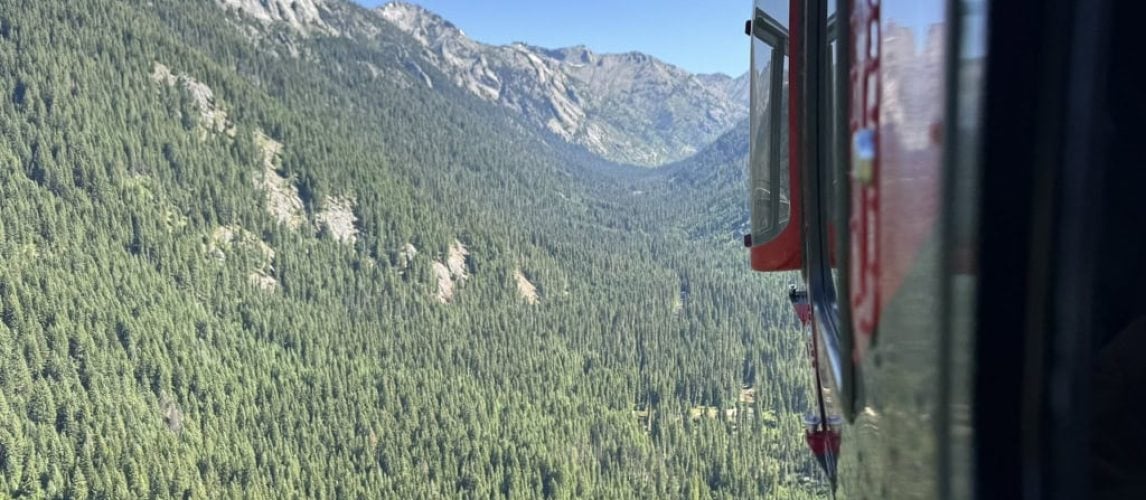
As the North American grid continues to expand and modernize, transmission owners face growing pressure to improve reliability and resilience, even in the most remote terrain. Federal studies show that nearly every region of the United States would gain reliability and resilience benefits from additional and upgraded transmission infrastructure.The Department of Energy’s Energy.gov+1 At the same time, new projects increasingly push into mountainous, forested, and environmentally sensitive areas where traditional access is slow, costly, and risky.
That is where utility helicopter power line services become indispensable. By pairing heavy-lift helicopters with highly trained crews, transmission owners can build, inspect, and maintain power lines more safely and efficiently—without carving roads through rugged terrain or exposing ground crews to unnecessary hazards.
R&R Conner Aviation specializes in this kind of high-consequence work, using medium-category UH-1 “Huey” helicopters and experienced external-load pilots to support power line projects across the western United States.
Why Remote Power Line Projects Are So Challenging
Transmission lines rarely follow easy routes. To connect generation to population centers, utilities must cross:
- Steep mountain ridges
- Deep river valleys and canyons
- Dense forests with limited or no road networks
- Environmentally sensitive habitats where road building is tightly restricted
Traditional, ground-based approaches to construction and maintenance struggle in these environments:
- Access roads are expensive and slow to build. Heavy equipment and material movement can require miles of new or upgraded roads, each requiring design, permitting, and environmental review.
- Safety risks increase for crews. Linemen and construction teams may face steep slopes, unstable ground, and long approaches on foot or by off-road vehicles.
- Outages can stretch longer than necessary. When a line trip occurs in a hard-to-reach corridor, it can take days just to reach and assess the problem.
By contrast, a properly equipped utility helicopter can bypass most of these obstacles in a single lift.
How Utility Helicopters Transform Power Line Construction and Maintenance
1. Rapid access to hard-to-reach structures
Helicopters can put crews, tools, and small equipment directly at remote structures in minutes. Industry experience has shown that aerial access dramatically reduces the time required to patrol and assess defects compared with ground-based inspection alone.Fair Lifts Helicopter Services+1
This translates to:
- Faster identification of damaged components
- Shorter outage durations
- Less time spent traversing difficult or dangerous terrain
2. A safer working platform for specialized tasks
For many tasks—such as insulator replacement, spacer installation, or live-line work—helicopters provide a stable, controlled platform that reduces the need to climb towers or work from high-reach equipment on unstable surfaces. External research on utility helicopter work notes that aerial platforms can reduce exposure to fall hazards and other risks associated with tower climbing and ground-based access.LinkedIn+1
3. Heavy-lift support for foundations and structures
In remote corridors, moving concrete, steel, and hardware is often the bottleneck. Heavy-lift helicopters like R&R Conner Aviation’s UH-1s can carry:
- Foundation concrete via precision bucket operations
- Steel tower components and crossarms
- Hardware pallets, conductor reels in segments, and tools
By flying directly from staging areas to structure sites, helicopters can replace days or weeks of road-building and ground transport with a single well-planned airlift.
4. Efficient routine inspection and vegetation patrols
Routine visual patrols remain a key part of transmission maintenance programs. Many utilities now rely on helicopters to:
- Conduct low-level visual inspections of conductors, insulators, and structures
- Identify vegetation encroachment along rights-of-way
- Capture high-quality imagery for engineering review
Industry and regulatory bodies emphasize vegetation management and regular inspection as central pillars of transmission reliability.Federal Energy Regulatory Commission Helicopters help utilities meet these expectations, especially on long spans through inaccessible terrain.
5. Storm response and emergency restoration
After storms, wildfires, or landslides, roads may be blocked or destroyed. Utility helicopter power line services are vital for:
- Rapid aerial damage assessment
- Transporting crews and emergency hardware to damaged structures
- Removing downed trees and debris from lines in inaccessible areas
- Supporting temporary structures and emergency rebuilds
This combination of speed and flexibility is critical when communities are waiting for power to be restored.
How R&R Conner Aviation Supports Power Line Owners
R&R Conner Aviation has been operating from Montana’s rugged landscape since 2005, giving the company deep experience with challenging terrain, high-altitude density altitude, and year-round operations.
Key elements of the company’s utility helicopter power line services include:
Heavy-lift UH-1 Huey fleet
R&R Conner operates UH-1 Huey helicopters specifically configured for utility and external-load work. Their lift capacity and performance in hot-and-high conditions make them well suited for foundation pours, structure erection, and long-line material transport where other platforms may struggle.
External-load and vertical-reference expertise
Utility work requires pilots who are comfortable flying:
- Long-line operations in complex terrain
- Precision placement of steel, hardware, and foundation buckets
- Hover operations near energized infrastructure under strict safety protocols
R&R Conner’s crews are trained and operated under FAA guidelines for rotorcraft external-load operations, which set expectations for training, procedures, and risk mitigation in this specialized mission set.Federal Aviation Administration
Remote access and foundation support
From remote foundation pours to material delivery, R&R Conner’s helicopters help transmission owners avoid building roads solely for short-term construction access. Instead, concrete, rebar, and small equipment can be flown directly to foundation sites, minimizing ground disturbance and environmental impacts.
Storm and emergency restoration
The same skill set used for planned projects applies during emergencies. When storms or wildfires damage transmission corridors, helicopters can be rapidly staged to:
- Survey damage
- Deliver emergency materials
- Support temporary structures and rebuilds
R&R Conner’s Power Line helicopter services page provides additional detail on specific capabilities, from pole setting to storm cleanup and remote material transport.
When Utility Helicopter Power Line Services Add the Most Value
While helicopters are not needed on every project, they often provide exceptional value in situations such as:
- Mountainous or canyon terrain where access roads are impractical
- Environmentally sensitive areas where ground disturbance must be minimized
- River crossings or wetlands where heavy equipment access is limited
- Long-distance rebuilds after major storms or wildfires
- Upgrades requiring large, heavy components on existing structures in hard-to-reach spans
In many of these cases, the aerial solution is not only faster but can be more cost-effective once total road-building, permitting, and schedule risks are considered.
Choosing a Utility Helicopter Partner for Your Next Project
When evaluating partners for utility helicopter power line services, consider:
- Experience with transmission projects
Look for a track record in power line construction, maintenance, and storm restoration—especially in terrain similar to your project. - Fleet capability
Verify that the helicopters in use have the lift capacity, performance, and external-load approvals required for your planned lifts. - Safety culture and certifications
Review safety programs, training standards, and how closely the operator follows FAA guidance on external-load operations and work around energized infrastructure. - Project planning and coordination support
Strong operators engage early in planning, advising on staging areas, lift plans, and risk mitigation strategies that save time and reduce change orders. - Year-round readiness
Projects and emergencies are not limited to a single season. An operator that flies year-round in challenging conditions can support you whenever issues arise.
Put R&R Conner Aviation to Work on Your Next Transmission Project
Whether you are planning a new transmission corridor, upgrading existing structures, or preparing for storm season, utility helicopter power line services can dramatically improve safety, speed, and reliability.
To discuss your next project, you can:
- Learn more about R&R Conner Aviation’s Power Lines services
- Request a detailed estimate through the Project Quote page
- Review broader national transmission planning context with the U.S. Department of Energy’s Grid Deployment and Transmission resourcesThe Department of Energy’s Energy.gov
By combining proven helicopters, experienced crews, and a deep understanding of utility work, R&R Conner Aviation helps keep power flowing—no matter how remote the line.